
New on Streaming This Week: Weekly Roundup Framework
A practical weekly framework for new on streaming this week: platform snapshots, new episodes vs movies, prioritization rules, and faster availability checks.
New on Streaming This Week: A Practical Weekly Roundup Framework
"New on streaming this week" is the question multi-service viewers ask every Friday night and every Monday morning. The hard part is not finding one title. It is checking Netflix, Disney+, Max, Prime Video, Hulu, Apple TV+, and Paramount+ without losing an hour to app-hopping, half-updated "Coming Soon" rows, and platform marketing that mixes originals, licensed films, and episode drops into one blur.
This guide keeps the weekly task simple. It explains what usually counts as new, how new movies differ from new episodes and seasons, how to scan platforms without getting stuck, and how to prioritize what is worth watching first. It also covers a practical way to re-check availability and renewal status so the weekly list stays useful after the weekend.
What "new on streaming this week" usually includes
A useful weekly roundup is broader than one "New episodes streaming this week" row. Most viewers are really scanning four buckets at once:
- New movies to stream — theatrical titles landing on a subscription tier, platform originals, or licensed films that rotate into the catalog.
- Series premieres and new seasons — full-season dumps or premiere-week launches that change what people start next.
- New episodes streaming this week — weekly-release shows where missing one episode can matter more than missing a movie.
- Notable platform moves — a title shifting services, a free-with-ads tier change, or a high-interest renewal/cancellation signal that affects whether a binge is worth starting.
If a roundup only covers one of those buckets, it answers a narrower question than most people meant when they searched for new releases streaming this week.
Movies vs seasons vs weekly episode drops
Treat format as a prioritization signal, not just a label.
| Format | What "new" usually means | Best next step |
|---|---|---|
| Movie | One-and-done watch window | Queue if mood and runtime fit tonight |
| New season / full drop | Multi-hour commitment | Confirm the show is still active before investing |
| Weekly episode | Recurring appointment viewing | Check air day, catch-up status, and whether the season is still airing |
| Limited series / event drop | Short, high-attention window | Watch sooner if conversation value matters |
A common mistake is treating every "new" badge the same. A two-hour movie and a weekly drama create different planning problems. New movies to stream on Netflix can be a one-night decision. New episodes streaming this week often need a calendar habit.
The fastest weekly scan: platform-by-platform snapshot
Do not open every app and scroll. Use the same snapshot structure every week so the scan becomes muscle memory.
1. Start with services already paid for
List only active subscriptions first. A great title on a paused service is interesting later, not tonight.
2. Capture four fields per platform
For each service, jot:
- Standout movie arrivals
- New seasons / premieres
- New episodes this week
- Anything time-sensitive (short window, event premiere, or a show you already follow)
Keep each field to a few titles. The goal is a decision board, not a catalog dump.
3. Use a simple platform checklist
A practical multi-platform pass usually looks like this:
- Netflix — originals, licensed movies, and weekly series that land in the same homepage rows.
- Disney+ — franchise seasons, family titles, and event drops that can crowd out quieter picks.
- Max — prestige series episode cadence plus movie rotations.
- Prime Video — mix of included titles and rent/buy upsells; separate free-with-membership from paid add-ons.
- Hulu — next-day network episodes and streaming originals often sit side by side.
- Apple TV+ — smaller catalog, higher signal per new release.
- Paramount+ — live-sports adjacency and series drops depending on the week.
Region and bundle status change what appears. US catalogs are not universal, and a title marked "new" on one account tier may still be rent/buy-only on another.
4. Separate "included" from "extra cost"
Any weekly list that blurs subscription inventory with rent/buy options creates false urgency. Mark:
- included with the base plan
- ads-tier only
- add-on channel
- rent/buy
That single filter prevents the most expensive kind of "new release" mistake.
How to prioritize what to watch first
Once the snapshot exists, rank titles with a short decision stack. The order matters more than taste debates.
Priority 1: Time-sensitive watching
Watch first when delay has a cost:
- a title likely to rotate off soon
- a weekly episode you are mid-season on
- a premiere people will discuss this week
- a family or group watch that only works on a specific night
If nothing is time-sensitive, skip straight to mood fit.
Priority 2: Commitment cost
Ask how much attention the title demands:
- movie under two hours
- short limited series
- long returning season
- dense weekly drama with homework episodes
High interest plus high commitment should not automatically win. A strong movie often beats an ambitious season when the week is already full.
Priority 3: Continuity value
Returning shows and mid-season episode drops get a boost if the viewer is already invested. Brand-new seasons get a boost only after a quick status check: renewed, final season, or uncertain. Starting a multi-season commitment without that check is a classic cord-cutter trap.
Priority 4: Platform coverage efficiency
If two titles are close, prefer the one on a service already used heavily this month. That keeps the subscription earning its place and reduces the urge to reactivate everything at once.
A one-minute scoring shortcut
Give each candidate 0–2 points for:
- urgency
- mood fit
- low friction (runtime / availability clarity)
- social or household interest
Watch the highest total first. Tie-break toward the shorter, already-included option.
A reusable weekly roundup template
Copy this structure every week. It works whether the week is packed or quiet.
A. Week header
- Week of:
[start date]–[end date] - Active services checked:
- Region / account notes:
B. Top picks board
- Watch tonight — one low-friction title
- Best new movie — one standout film
- Best new episodes — one series worth the appointment
- Hold for weekend — longer season or dual-watch option
- Skip unless... — interesting but only if a condition is met
C. Platform snapshot lists
Use short bullets, not essays:
Netflix
- Movies:
- Seasons / premieres:
- Episodes this week:
Disney+
- Movies:
- Seasons / premieres:
- Episodes this week:
Repeat for Max, Prime Video, Hulu, Apple TV+, and Paramount+.
D. Decision notes
- Titles needing a status check before starting:
- Titles that may leave soon or feel event-driven:
- Services that looked thin this week:
This template turns "new on streaming this week" from an endless scroll into a closed task with a completion standard: five ranked picks and no unresolved availability surprises.

Trade-offs and common mistakes
Weekly streaming lists fail for predictable reasons.
Mistake 1: Treating homepage rows as complete. Platform rows optimize for promotion, not personal coverage. A quiet licensed movie can matter more than a heavily pushed original.
Mistake 2: Confusing announcement date with watchable date. Trailers, "coming to," and "now streaming" are different states. Only count titles that are actually playable on the account being used.
Mistake 3: Building a Netflix-only habit. New movies to stream on Netflix are easy to find, so "new movies to stream on Netflix" becomes the default query. It is still only one service. A multi-service household that ignores other apps will keep overpaying for unused catalogs.
Mistake 4: Starting seasons without a return path. If a show is between seasons, canceled, or stuck in "maybe," the cost is not one episode. It is the unfinished commitment.
Mistake 5: Overcollecting titles. A useful weekly list is short. If more than a handful of titles are "must watch," the list is a backlog, not a plan.
The practical limitation of any weekly roundup is freshness. Catalogs, windows, and episode schedules move. A list without a re-check habit decays quickly.
How to re-check availability and show status without opening every app
After the first pass, the weekly job becomes maintenance:
- Confirm the chosen title is playable on the intended tier.
- Separate subscription access from rent/buy.
- For series, check whether new episodes are still coming and whether the show has a clear renewal or ending status.
- Revisit only the services that earned attention this week.
TonightWatch is useful here as a supporting lookup layer rather than another place to binge-scroll. On TonightWatch, weekly-oriented surfaces highlight what to watch around the current week, while status-style boards help separate arrivals, departures, and renewal-window questions from pure title hype. Product materials describe short, dated updates on cancellations, renewals, platform moves, and new-season announcements, with a preference for labeling what is confirmed versus what is only reported. Availability and pricing claims are also treated as time-sensitive: check the last-verified date before acting, and treat US-default figures as a baseline rather than a global guarantee.
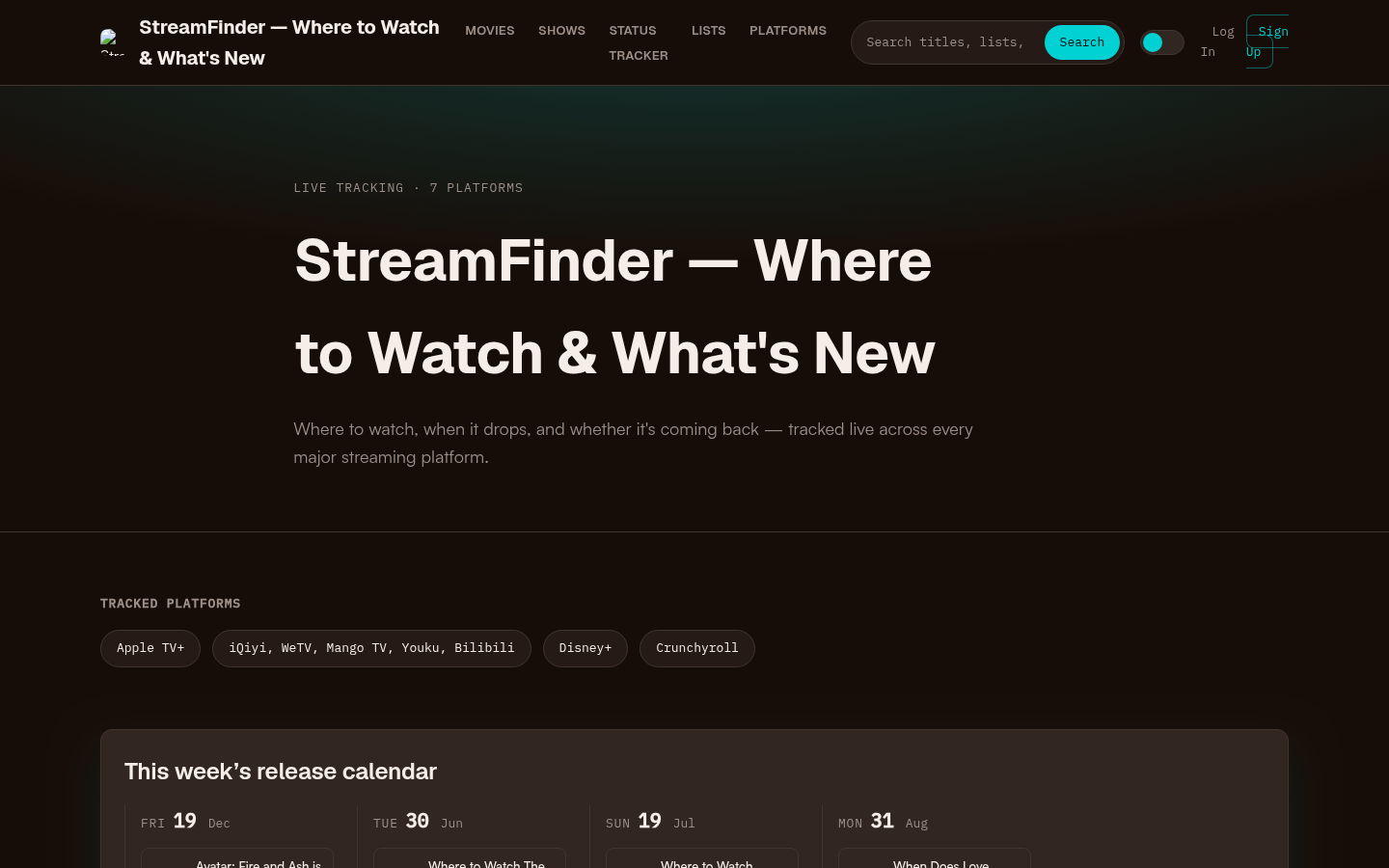
Homepage first screen showing hero section with tagline, tracked platforms (Apple TV+, Disney+, Crunchyroll, etc.), this week's release calendar, trending now section, and recent s
That combination matters for the weekly workflow. A title can be newly available and still be a poor start if the show’s longer-term status is weak. Conversely, a quieter release can be the better Friday-night choice when it is clearly included, easy to finish, and not buried under platform promotion.
Use the product for verification and shortlists. Keep the final watch decision with the household’s mood, runtime, and budget.
FAQ: new releases streaming this week
What counts as "new episodes streaming this week"?
Usually the current week’s drop for an ongoing series: one episode, a two-episode event, or a short batch. It is not the same as an entire new season arriving at once. If the goal is catch-up, check whether earlier episodes are still available on the same service.
Are new movies to stream in 2026 listed the same way as TV episodes?
No. Movie roundups often mix subscription arrivals, premium rentals, and carryover titles still being promoted. TV episode lists are more calendar-driven. Keep movies and episodes in separate rows so a two-hour film does not compete with an appointment drama under the same logic.
Why do Netflix lists dominate "new on streaming" searches?
Netflix has broad awareness and constant original output, so "new movies to stream on Netflix" is an easy default query. It is still only one service. A complete weekly answer should at least glance at the other subscriptions already being paid for.
How often should a weekly streaming list be refreshed?
Build it once at the start of the watch week, then do a short midweek pass for episode drops and any title that may leave soon. Full rescans every day usually create noise, not better decisions.
What if a title is new but only available to rent?
Treat it as a separate budget decision. A rental can be worth it for a same-night plan, but it should not be mixed into the free-with-subscription shortlist without a clear label.
How can someone avoid starting a show that may not come back?
Before a multi-season commitment, check renewal, cancellation, or final-season signals and prefer sources that distinguish confirmed news from reported speculation. If status is unclear, choose a movie or limited series instead.
Bottom line
"New on streaming this week" is a recurring operations task, not a one-time article topic. The winning habit is consistent:
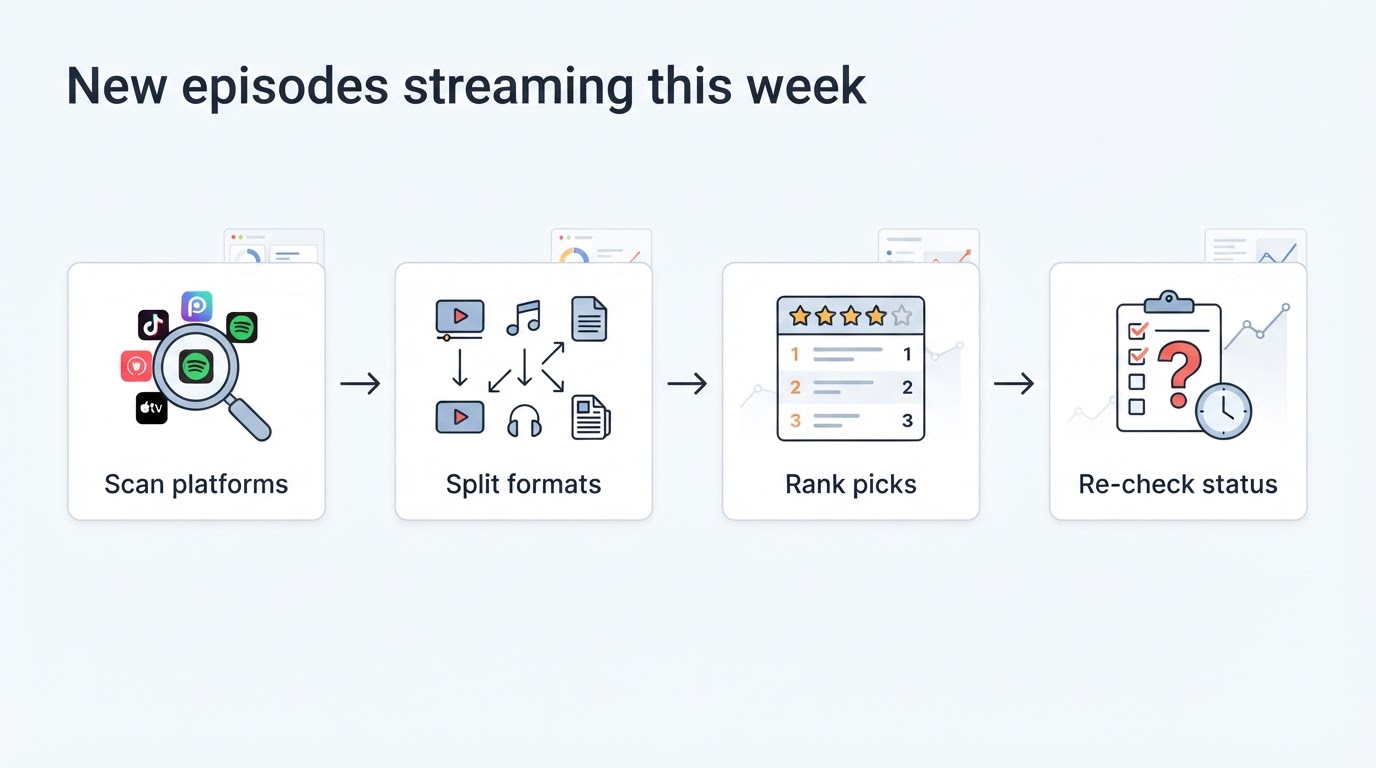
- Scan active platforms with the same four-field snapshot.
- Split movies, seasons, and weekly episodes.
- Rank by urgency, commitment, continuity, and included access.
- Keep the final board short.
- Re-check availability and series status before investing a night or a whole season.
Do that, and new releases streaming this week stop feeling like a second full-time job. The week gets a clear watch plan, the subscriptions get used on purpose, and the next Friday starts from a template instead of a blank search bar.