
TV Show Release Dates: Track 2026 Premieres & Returns
Learn how to find and verify TV show release dates, from 2026 premieres and monthly returns to shows airing new episodes now—without relying on unverified rumors.
TV Show Release Dates: How to Track Premieres, Returns, and New Episodes
Looking up tv show release dates should answer a simple question: when does the next episode actually land, and on which platform. In practice, that answer is messy. Networks announce season premieres months out, streamers stagger global windows, and midseason returns can shift after sports overruns, awards weeks, or production delays.

This guide is a practical way to read those schedules without treating every rumor as a firm date. It covers how premiere, return, and episode-drop language differs; how to verify dates across broadcast, cable, and streaming; which 2026 windows are worth tracking; and how to stay current when calendars change.
Premiere date, season return, and episode drop are not the same thing
Most confusion starts with vocabulary. The same show can have three different "release" moments, and only one of them may match what you care about tonight.
| Term | What it usually means | What to check next |
|---|---|---|
| Series or season premiere | First episode of a new show or new season | Exact calendar date, time zone, and platform |
| Season return / midseason return | A continuing season resumes after a hiatus | Whether remaining episodes are weekly or batched |
| Episode drop schedule | How new episodes arrive after the premiere | Weekly linear airing vs same-day streaming vs full-season dump |
| Finale date | Last episode of the season | Often announced later than the premiere |
| Renewal / cancellation status | Whether another season is ordered | Separate from the next air date; status can lag production |
A useful rule: if a headline only says a show is "coming in 2026," treat that as a planning window, not a watch plan. You still need the episode cadence and the platform that holds the rights in your country.
How release schedules differ across broadcast, cable, and streaming
Broadcast and basic cable
Linear networks still organize around premiere weeks, sweeps periods, and sports calendars. A Tuesday 9 p.m. ET slot usually means one new episode per week, with reruns or specials filling gaps. Holiday weeks, award shows, and live sports can push a return by a week without a new marketing campaign.
When you track TV shows currently airing new episodes, look for:
- the official series page on the network site
- the local listings time in your time zone
- whether the same episode is available on-demand or on the network's app the same night
Premium cable
Premium cable often mixes theatrical-style premiere events with weekly drops. A season may launch with a two-episode opener, then settle into a weekly pattern. International rights can trail the U.S. window, so a friend's date in another region is not automatically yours.
Streaming platforms
Streamers use several models at once:
- full-season drops on day one
- weekly episode releases after a multi-episode premiere
- limited-series event drops over a short window
- regional day-and-date differences
That is why a Netflix original, a Disney+ weekly drama, and a Prime Video event series can all "premiere in March" while offering completely different watching experiences. Always separate the marketing premiere from the episode inventory you can actually finish that night.
How to find and verify TV show release dates
Use a two-pass check: announcement first, confirmation second.
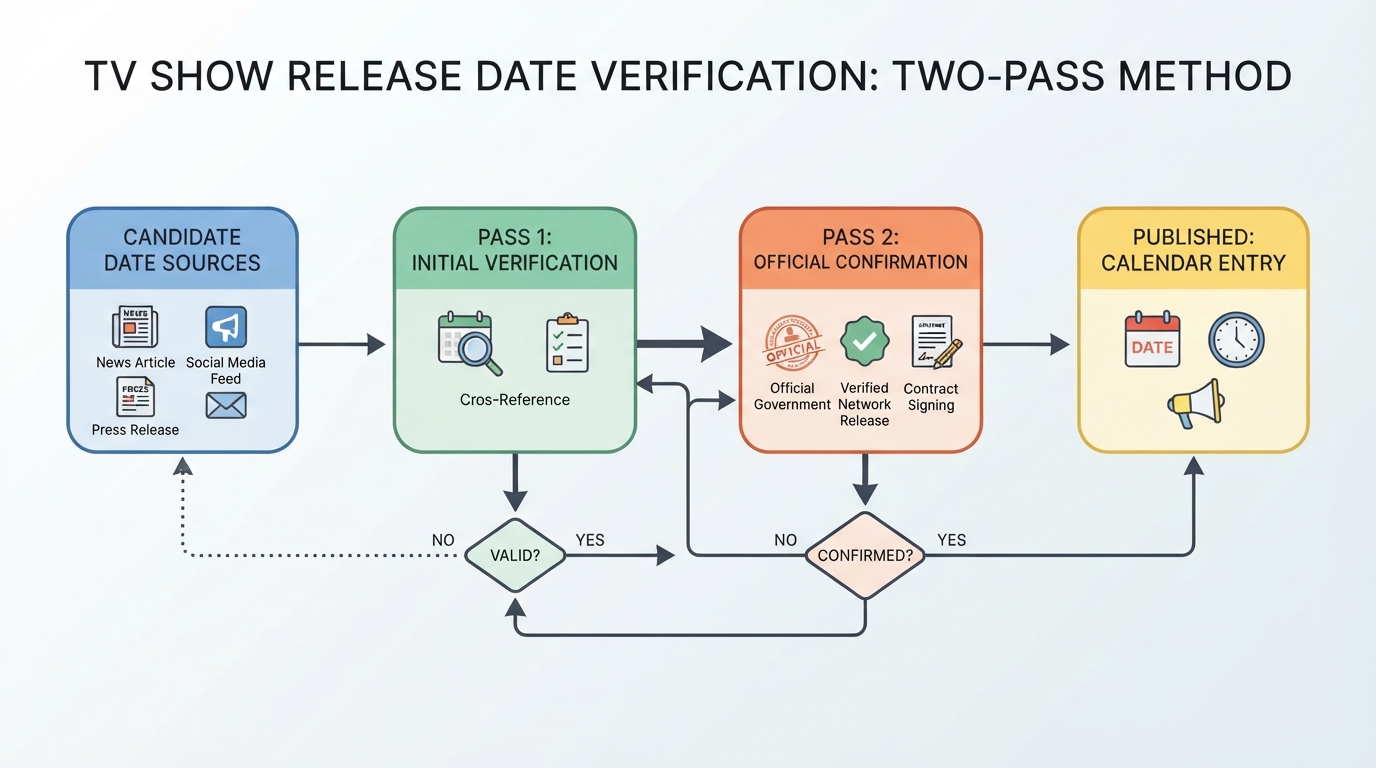
Pass 1: collect candidate dates
Start with sources that originate the schedule, not just repost it:
- Official show, network, or streamer pages and press rooms
- Platform "coming soon" or Tudum/Press/WhatsOn-style hubs when they publish dated lineups
- Talent or showrunner posts that link back to an official announcement
- Aggregated calendars only as a discovery layer
Candidate language to trust more:
- "premieres on [weekday], [month day], [year]"
- "returns [month day] with new episodes weekly"
- "first two episodes drop [date], then weekly"
Candidate language that still needs confirmation:
- "expected in spring 2026"
- "slated for later this year"
- "aiming for a [month] return"
- unsourced social posts or spoiler accounts
Pass 2: verify before you plan around it
Confirm at least two independent signals when the date matters:
- the platform still lists the same date on the title page
- a reputable trade or official press release uses the same wording
- listings or the in-app calendar show an episode number, not only artwork
Also check the quiet details that break plans:
- Time zone: a 12:01 a.m. PT drop is already next-day morning in much of the U.S. and later still internationally
- Episode count remaining: a "return" can be four episodes or twelve
- Live events and sports bumpers: linear returns move more often than streamer dumps
- Rights windows: a show can premiere on one service and move later; the premiere date is not permanent availability
If those signals disagree, keep the earlier firm date only if the official platform page still supports it. Otherwise mark the title TBA / watch the window.
2026 TV shows release dates worth tracking by window
Exact day-level lineups change throughout the year, so the practical approach is to maintain monthly watchlists and upgrade titles from window to confirmed date as official pages harden.
January 2026 TV premiere dates and winter returns
January is usually dense with winter premieres and midseason returns. Prioritize:
- network dramas and procedurals locking post-holiday slots
- streamer series that missed a fall window and shifted to early year
- limited series timed around awards-season attention
For TV shows returning in January 2026, separate "order renewed" from "episodes dated." A renewal announcement from last year does not guarantee a January start.
February and March 2026 returns
February often absorbs sports interruptions and awards programming on linear TV, which can compress or delay returns. March tends to reopen room for scripted launches once major events clear.
When scanning TV shows returning in February 2026 or TV shows returning in March 2026, ask:
- Is this a true season premiere or a backlog of already-shot episodes?
- Does the platform publish weekly episode titles yet?
- Has the show publicly finished production, or is the date still aspirational?
Spring into early summer: May and June premieres
Late spring and early summer are useful for:
- reality and competition cycles
- prestige cable/streamer handoffs after winter finales
- international titles getting U.S. windows
Searches for TV premiere dates May 2026 or TV show premieres June 2026 are often filled with soft holds. Keep a shortlist of titles with:
- a platform home
- a completed or near-complete production status
- either a month window or a dated trailer/key art drop
Upgrade a title to your calendar only when the platform or network posts a day.
Best upcoming TV shows 2026: build a shortlist, not a rumor pile
"Best" is personal, but a usable upcoming list is not. Rank candidates by readiness:
| Readiness tier | What you know | Calendar action |
|---|---|---|
| Confirmed date | Official day + platform | Add alert and episode cadence |
| Firm window | Month or premiere week announced | Weekly re-check of official page |
| Soft window | Season/year only | Keep on radar; do not plan travel or watch parties |
| Status only | Renewed/ordered with no airing plan | Track renewal board, not release calendar |
That framework keeps best upcoming TV shows 2026 searches tied to watchability instead of hype volume.
Shows currently airing new episodes: a weekly checklist
If your goal is "what can I watch that is actively releasing," run a weekly pass:
- Linear grid: scan the networks you already pay for and note series with a new episode number this week.
- Streamer continue watching / new episodes rows: these update faster than evergreen catalogs.
- Official episode guides: confirm the latest episode number and whether next week is already dated.
- Catch-up path: decide if you are joining midseason and need prior episodes first.
For TV shows currently airing new episodes, the highest-confidence signal is an episode-level date, not a season-level marketing page. If only Season 3 artwork exists with no episode list, treat the show as upcoming rather than airing.
A simple personal board works well:
- Airing now: dated episode this week or next
- Returning soon: firm date inside 30 days
- 2026 window: month known, day unknown
- Paused / TBA: delayed, hiatus without return date, or conflicting reports
Practical ways to stay updated when schedules change
Release calendars move. Build a lightweight system instead of relying on memory.
1. Follow the source of truth for each title
Pick one official page per show and revisit it after major trailers, upfronts, Comic-Con panels, or strike/production news. Aggregators are helpful discovery layers; they should not be the only confirmation.
2. Separate alerts by urgency
- Day-of alerts for shows you watch live or same-night
- Week-ahead alerts for returning favorites
- Monthly review for 2026 windows still marked TBA
3. Watch for the common change patterns
Dates usually slip for production delays, creative retooling, sports overruns, platform event stacking, or international rights timing. A moved date is normal; a silent disappearance from the official upcoming row is a stronger warning to re-verify.
4. Record what kind of date you saved
In any notes app or calendar, label entries as premiere, return, weekly episode, or finale. That prevents a season premiere reminder from being mistaken for every episode night.
5. Use a cross-platform tracker carefully
Discovery tools can help when you follow many services at once. StreamFinder, for example, is built around questions like where a title streams, when it drops, and whether it is coming back, including a homepage release-calendar style view for upcoming titles. Treat any third-party calendar as a lead generator: confirm the day and episode cadence on the platform that will actually carry the episode before you depend on it.
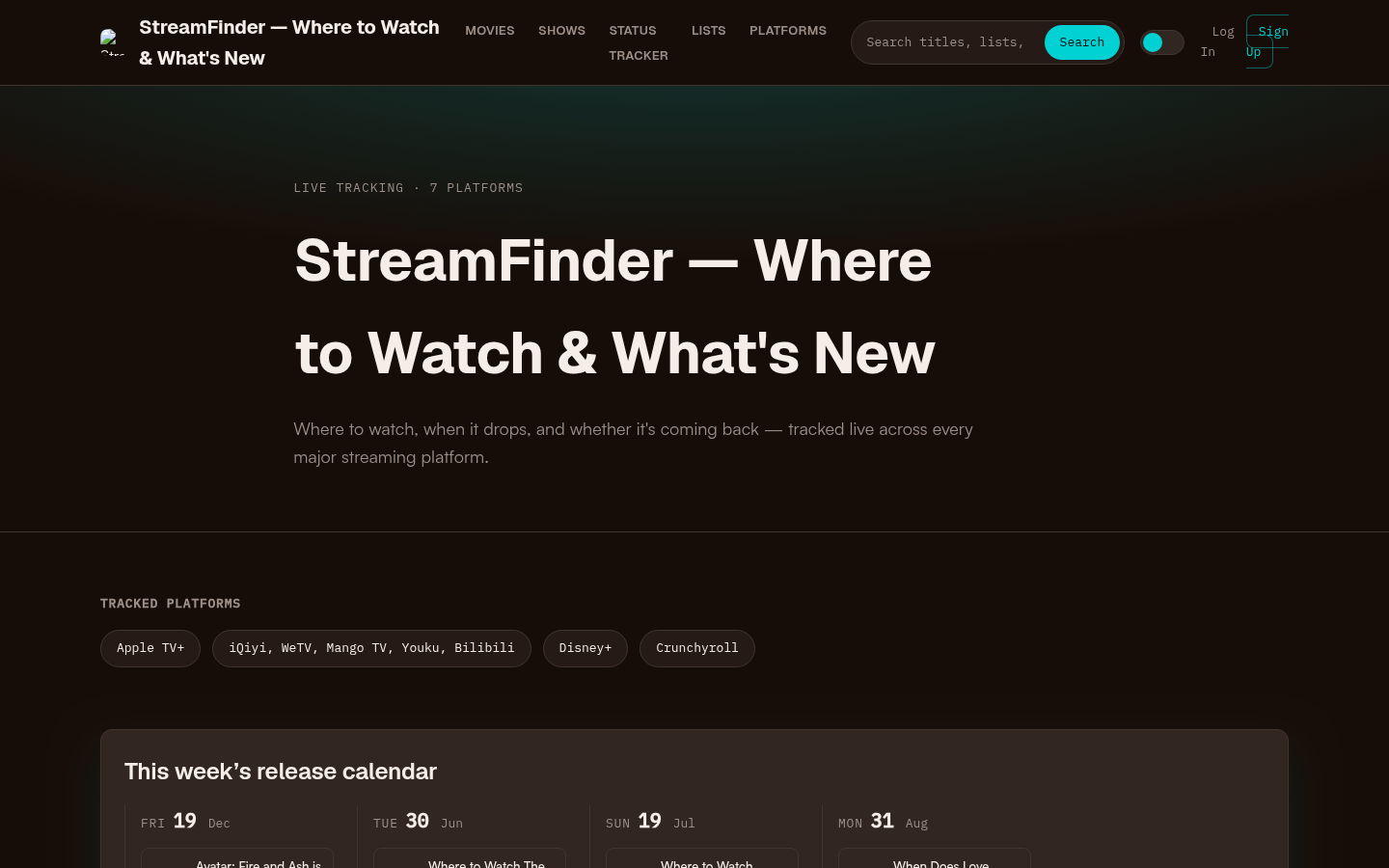
Homepage first screen showing hero section with tagline, tracked platforms (Apple TV+, Disney+, Crunchyroll, etc.), this week's release calendar, trending now section, and recent s
A simple monthly workflow for TV show release dates
Use this loop at the start of each month:
- Collect titles you care about into the four buckets: airing now, returning soon, 2026 window, TBA.
- Confirm every "returning soon" title against the official platform or network page.
- Promote any soft window that gained a day-certain announcement.
- Demote anything that lost a date or now conflicts across sources.
- Plan viewing only for confirmed dates, including time zone and episode cadence.
That workflow scales whether you follow three prestige dramas or thirty reality and genre titles.
Quick answers
Where should I look first for a premiere date?
Start with the official network or streamer title page and any linked press release. Use calendars and news roundups to discover candidates, then verify on the platform that holds the rights in your region.
Why do two sites list different dates for the same show?
Common causes are time-zone conversion, a premiere-week announcement versus a later locked day, regional rights differences, or one site still showing an outdated window. Prefer the platform page that can actually play the episode.
How is a January premiere different from a show "returning in January"?
A premiere may mean a brand-new season start. A return can mean a midseason continuation after hiatus. Check whether episode 1 or a later episode number is scheduled.
What if the only information is "2026"?
Keep it on a radar list. Do not schedule around it until a month or day is official. Year-only placement is useful for anticipation, not for same-week viewing plans.
Bottom line
Accurate tv show release dates come from matching the right date type to the right platform cadence, then verifying before you plan. For 2026, track January through early-summer windows deliberately, upgrade titles only when official pages lock a day, and maintain a weekly list of shows actually airing new episodes. The calendar will keep moving; a verification habit matters more than any single roundup.