
Horror Movies to Watch by Mood, Era & Streaming
Choose horror movies to watch fast: essentials, scariest picks, classics and 1980s titles, plus Netflix-style streaming tips with intensity cues.
Horror Movies to Watch: A Fast Guide by Mood, Era, and Streaming
Looking for horror movies to watch tonight usually means one thing: too many options and not enough signal. Rankings, franchise timelines, and endless "best of" dumps rarely answer the real question—what should play right now for this mood, this group, and this tolerance for dread.
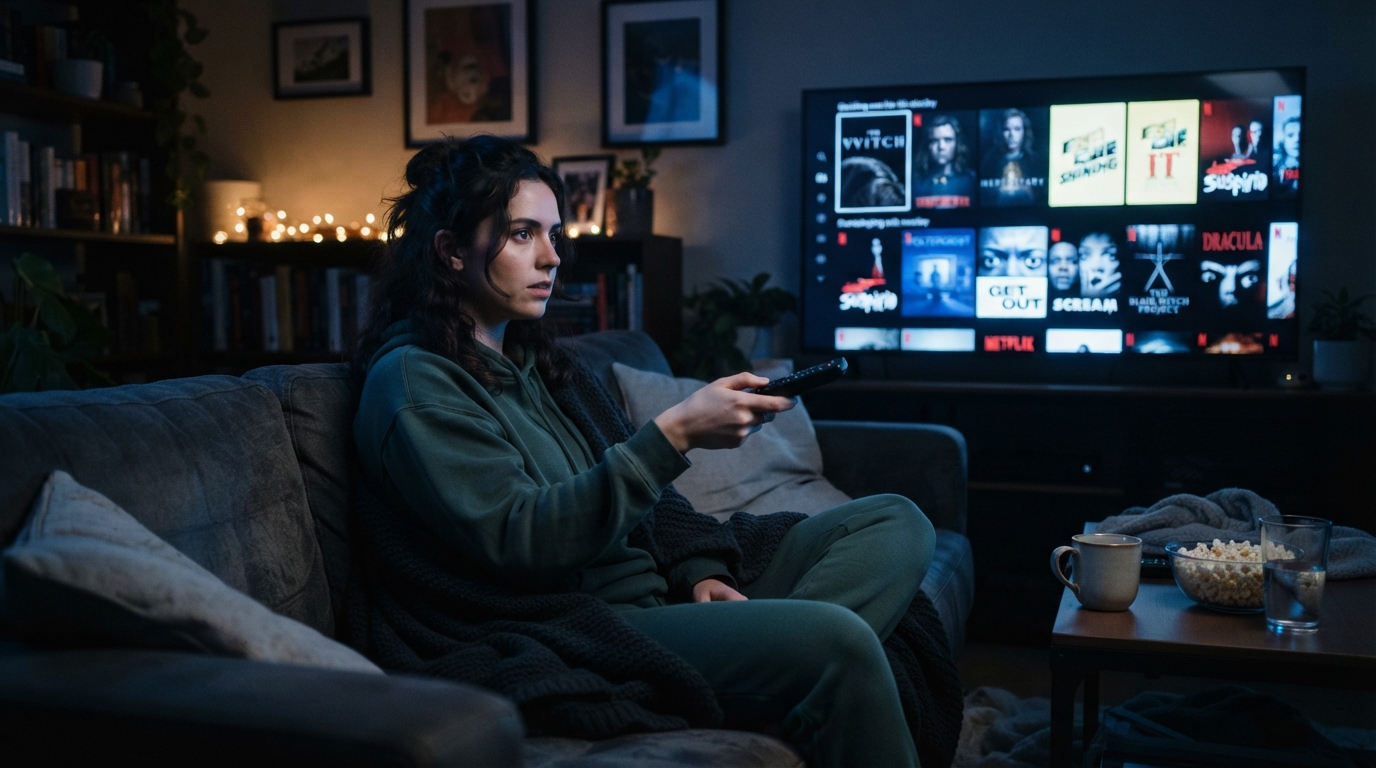
This guide is built for that decision. It groups picks by job-to-be-done: all-time essentials, scariest high-intensity watches, classic and 1980s titles, and streaming-first Netflix-style discovery. Each cluster includes intensity cues so a casual spooky-night viewer does not accidentally queue pure endurance horror.
Streaming catalogs shift by region and date. Treat platform notes as discovery angles, then confirm availability in the local app or a legitimate availability checker before pressing play. Skip unofficial "free movie" sites—they are usually illegal, unsafe, or both.
Start with the decision, not a ranked dump
Before browsing posters, lock three constraints:
- Intensity: mild tension, steady dread, jump-scare fun, or hard-R extremity.
- Tone: supernatural, psychological, creature, slashers, folk horror, found footage, or elevated arthouse dread.
- Session length: one tight 90-minute movie, a longer prestige film, or a short double feature.
Those three filters matter more than another anonymous top-10. A person who wants cozy-scary Friday energy and a person hunting the scariest horror movies are not looking for the same night.
A useful rule: if the room includes mixed tastes, start one notch milder than the bravest viewer wants. Horror is easy to escalate later and hard to recover from after the wrong opener.
Best horror movies as essentials: start here if the shelf is empty
When someone searches best horror movies or top 10 horror movies of all time, they usually want durable entry points—not obscurity for its own sake. These titles earn "essentials" status because they taught later movies a language viewers still recognize.
Halloween (1978)
Why watch: Pure stalker suspense with a simple, ruthless premise. Intensity: Medium-high dread, limited gore by modern standards. Best for: Viewers who want classic tension without maximal bloodletting.
The Exorcist (1973)
Why watch: Still the reference point for possession horror and cultural shock. Intensity: High psychological and religious dread; disturbing imagery. Best for: People ready for slow-burn seriousness rather than camp.
Alien (1979)
Why watch: Horror craft inside a science-fiction shell—isolation, sound design, and a creature that never overexplains itself. Intensity: High suspense; violence is sharp rather than constant. Best for: Viewers who like atmosphere and craft as much as scares.
The Silence of the Lambs (1991)
Why watch: Thriller-horror hybrid where conversation is more frightening than jump cuts. Intensity: Medium-high psychological unease; some graphic aftermath. Best for: Audiences who prefer menace and character over supernatural rules.
Get Out (2017)
Why watch: Modern proof that social tension can be as scary as monsters. Intensity: Medium building to high; more dread and concept than gore. Best for: First-time modern horror watchers and mixed groups.
Hereditary (2018)
Why watch: Family grief turned into relentless occult dread. Intensity: Very high emotional and visual disturbance. Best for: Experienced viewers; poor opener for casual nights.
Trade-off: "Best" lists overweight consensus. A landmark film can still be the wrong movie for a tired weeknight. Essentials are a map, not a homework list.
Scariest horror movies: when the goal is genuine discomfort
"Scariest" is personal. What wrecks one viewer is silly to another. Still, certain films repeatedly show up when people ask for scariest horror movies because they attack comfort from more than one angle: sound, implication, body horror, or no-exit paranoia.
Use this cluster only after intensity is explicitly wanted.
High-dread, lower-camp picks
- The Witch (2015): Slow folk-horror pressure, historical setting, almost no jump-scare safety valve. Intensity: high dread, low gore.
- It Follows (2014): Simple rule, constant vulnerability, excellent score. Intensity: medium-high sustained anxiety.
- The Babadook (2014): Grief metaphor that still functions as a monster movie. Intensity: high emotional horror.
- **Rec (2007) or [REC]: Found-footage panic in tight spaces. Intensity: high; motion and chaos can fatigue some viewers.
Extreme / endurance territory
- Martyrs (2008, original French version): Philosophical cruelty and graphic suffering. Intensity: extreme. Not a group-night default.
- Audition (1999): Patient setup, punishing turn. Intensity: extreme; the late film is the point and the warning.
- Cannibal Holocaust (1980): Infamous for graphic content and production controversy. Intensity: extreme; many viewers are better served skipping it entirely.
Hard limitation: Chasing the scariest title often optimizes for aftermath, not enjoyment. If the goal is a fun fright, stop one tier below endurance cinema. If sleep, kids in the home, or a first date are factors, "scariest" is the wrong leaderboard.
Classic horror movies and old horror movies from the 1980s
Classic horror movies earn their keep through craft and influence. Old horror movies 1980s titles add a different pleasure: practical effects, synth or orchestral signatures, and a VHS-era willingness to be messy, funny, or mean.
Pre-1980 classics worth the reputation
- Nosferatu (1922) / restorations: Prototype vampire dread; silent-film eeriness still works.
- Psycho (1960): The template for domestic spaces turning hostile.
- Night of the Living Dead (1968): Social pressure cooker plus zombie blueprint.
- Carrie (1976): Teen cruelty and eruption; short, sharp, memorable.
1980s watches that still play
- The Shining (1980): Hotel isolation and formal control; more unease than gore.
- An American Werewolf in London (1981): Horror-comedy balance with landmark transformation effects.
- The Thing (1982): Paranoia masterpiece; practical creature work remains a high bar.
- Poltergeist (1982): Suburban invasion with set-piece spectacle; intensity varies by cut and tolerance for kid-in-peril stories.
- A Nightmare on Elm Street (1984): Dream-logic slasher icon; inventiveness over pure realism.
- Evil Dead II (1987): Carnival-energy horror comedy for viewers who want chaos, not prestige dread.
Why this cluster helps: Classics and 1980s films are often easier to find across legal rent/buy storefronts and rotating catalogs than brand-new exclusives. They also teach taste. After The Thing, modern imitation-and-trust thrillers make more sense. After Elm Street, surreal slashers stop feeling random.
Trade-off: Period pacing and effects can feel dated. That is not a defect if the watch goal is history and craft. It is a mismatch if the room only wants current jump-scare grammar.
Horror movies on Netflix and other streaming-first nights
Searches for horror movies on Netflix and top 10 horror movies on Netflix are really availability queries wearing recommendation clothing. The useful move is not memorizing a frozen top ten. Catalogs rotate, rights differ by country, and a title can be "a Netflix horror hit" in one year and absent the next.
How to shop a streaming horror row quickly
- Filter by horror, then sort by recent or recommended only after setting tone keywords in the mind: "folk," "found footage," "ghost," "slasher," "creature."
- Read the first two lines of the synopsis plus runtime. If the synopsis leans torture, pregnancy horror, or extreme despair, believe it.
- Check maturity rating and viewer notes for sexual violence or animal harm if those are deal-breakers.
- Prefer originals and exclusive-looking placements when the goal is "what can start in the next two minutes," but do not assume exclusive means best.
- Confirm the actual service badge before trusting a remembered listicle from months ago.
Streaming-friendly pick patterns (availability not guaranteed)
These are types that often surface on major platforms, including Netflix in some regions, and work well for "press play tonight" sessions:
- Contained haunted-house or apartment stories for single-evening closure.
- High-concept modern chillers (social dread, tech anxiety, folk rules) for viewers who bounce off older pacing.
- Creature features when the group wants spectacle over ambiguity.
- Smarter slashers when the room wants momentum and clear stakes.
- International horror (Korean, Spanish, Japanese, Scandinavian) when English-language rows feel repetitive.
Examples of widely discussed modern streaming-era titles people often seek out legally when available include His House, The Platform, Bird Box, Fear Street entries, and various platform originals. Because rights move, treat names as candidates to search—not as a promise they are on a given service tonight.
Legal watching beats "free" dead ends
If a site needs aggressive pop-ups, unexplained "ripped" uploads, or no legitimate storefront identity, leave. The reliable paths are subscription apps, official ad-supported tiers, digital rent/buy, libraries, and licensed free services. A slower legal option is still better than malware and stolen files.
A simple chooser: match the night in one minute
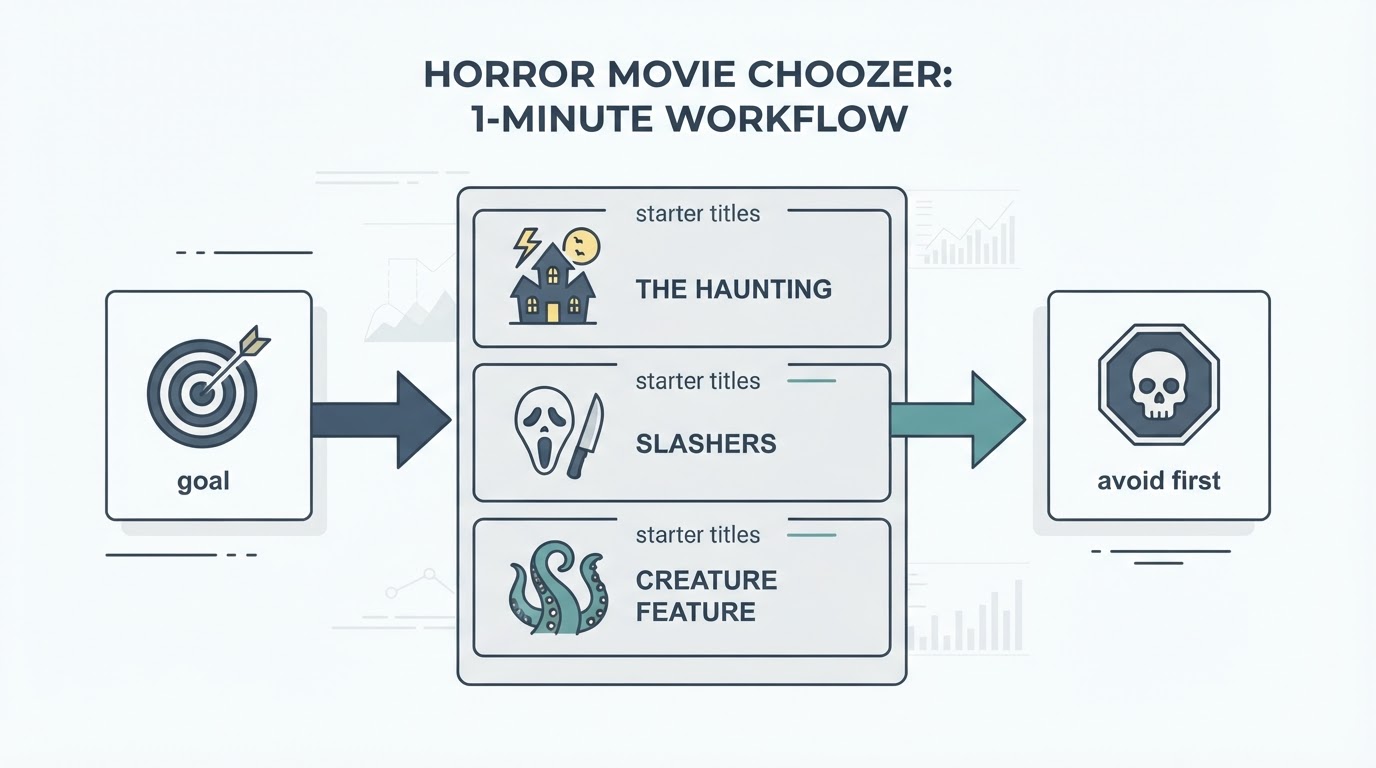
| Tonight's goal | Start with | Avoid first |
|---|---|---|
| Easy group scare | Get Out, A Nightmare on Elm Street, a lighter modern original | Hereditary, extreme French extremity films |
| Prestige dread | The Witch, The Babadook, The Exorcist | Loud camp slashers |
| Creature/practical-effects love | Alien, The Thing, An American Werewolf in London | Pure elevated-drama horror with almost no monster payoff |
| Short attention, high payoff | Tight 90-minute slashers or contained hauntings | Long slow-burns over 2 hours |
| Classics education | Psycho, Halloween, Night of the Living Dead | Jumping straight to endurance extreme cinema |
| Streaming-only night | Current service horror row + concept filters | Outdated "top 10 on Netflix" screenshots from social posts |
Common mistakes that waste the evening
- Optimizing for reputation instead of fit. A consensus great film can still kill the mood.
- Stacking intensity upward with no ceiling. Plan the peak scare, then stop.
- Ignoring runtime and downtime. A 95-minute sharp film beats a 150-minute masterpiece if bedtime is fixed.
- Trusting stale streaming screenshots. Always re-check the app.
- Using piracy shortcuts. They create security and legal risk without improving the recommendation quality.
Optional next step when titles keep bouncing between services
If the recurring pain is not "what is good" but "where is it right now," a legitimate availability workflow helps more than another static list. StreamFinder is built around streaming discovery—where a title is available, when it drops, and related status tracking—with curated editorial collections organized by genre, platform, and mood. That kind of lookup is useful after this guide narrows the shortlist, not as a replacement for taste.
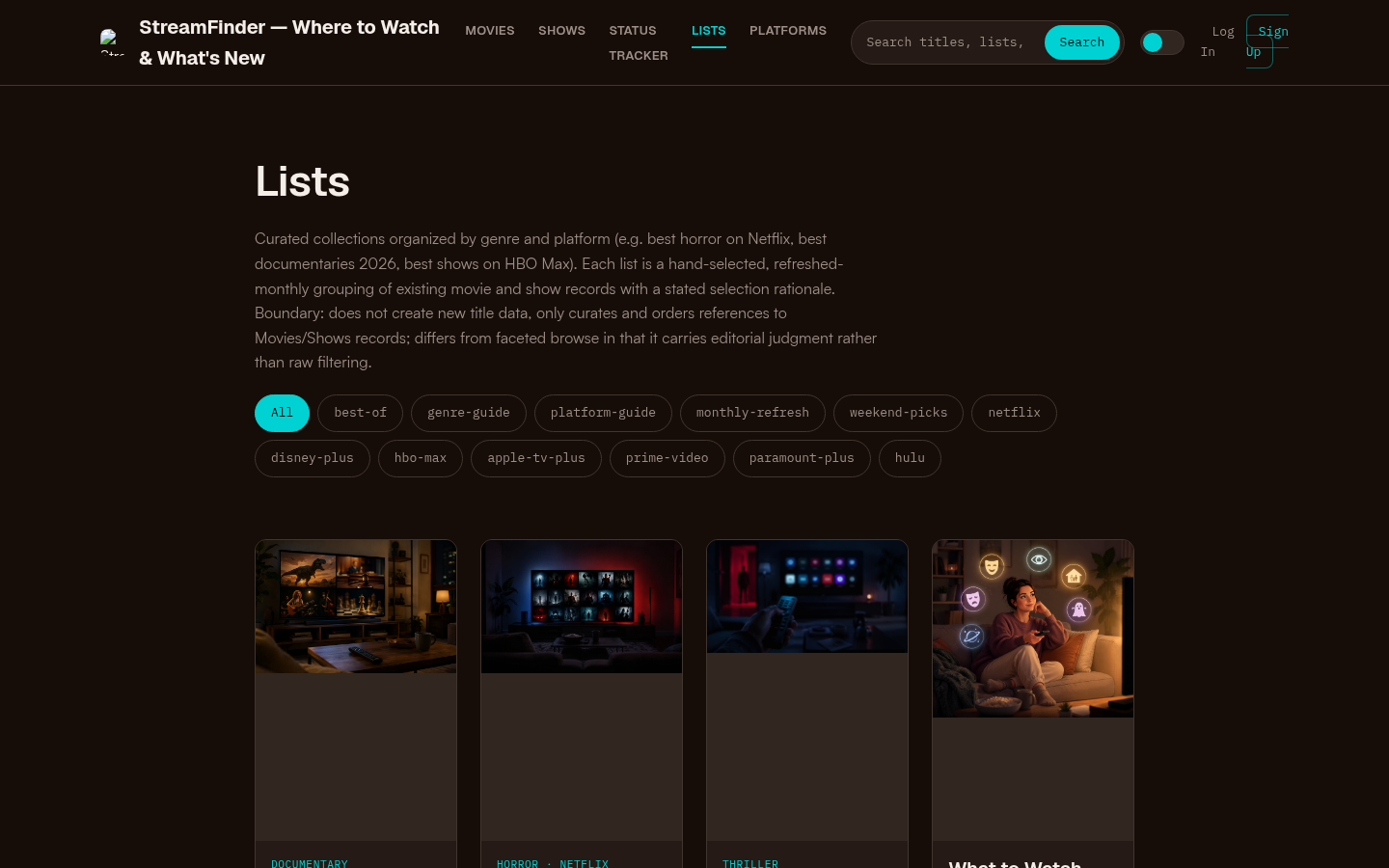
Curated collections page with tag filters (best-of, genre-guide, platform-guide, etc.) and article cards featuring documentary, horror, thriller, and weekend-pick lists.
Even without any tool, the durable method stays the same: choose intensity and tone first, pick one cluster above, confirm legal availability, and press play before the group renegotiates the entire genre.
Quick shortlists by appetite
Gateway night (lower regret): Get Out, Halloween, Poltergeist, a current well-reviewed platform original. Craft night: Alien, The Thing, The Silence of the Lambs, The Witch. No-sleep dare: Hereditary, Rec, Audition only if everyone opts in. Retro night: Evil Dead II, A Nightmare on Elm Street, An American Werewolf in London. Streaming scavenger night: open one licensed app, filter horror, reject anything outside the chosen intensity band within 60 seconds.
Horror recommendation quality is less about finding a secret unknown title and more about refusing the wrong famous one. Use the clusters, respect the intensity ceiling, and keep the watch legal. That is how "horror movies to watch" turns into an actual movie night instead of another thirty minutes of scrolling.